
How much absorption material is necessary for an effective room acoustics treatment? It’s a fair question to ask before starting a sound improvement project. Though there’s no one-size-fits-all answer, we can offer some guidelines and considerations for obtaining the right sound.
The right amount of absorption for a room acoustics treatment depends on four main and related variables:
• intended use of the room and the sound source;
• room size, including ceiling height;
• materials in the room, including furnishings and wall, floor, and ceiling type; and
• the type of absorption used.
Start by defining success: Does the room sound need to be only lightly corrected, or does the room construction or purpose demand serious sound deadening?
As a general rule, a moderate percentage of “live” (untreated) space is preferred—without it, a room sounds flat and lifeless. Use the following wall coverage percentages as a starting point for your room acoustics treatment (assuming absorption products rated
.70 to 1.0 NRC - Noise Reduction Coefficient):
•
Light absorption (5 to 25 percent coverage)—is appropriate for live recording or listening rooms, offices, conference rooms and rooms where people gather and converse.
•
Moderate absorption (25 to 50 percent coverage)—suits listening and control rooms that typically feature more subdued music, as well as larger business spaces. Moderate absorption of around 50 percent is a good estimate for many home theaters.
•
Heavy absorption (50 to 100 percent coverage)—suits drum rooms, music practice space, rooms that handle high-energy music. Vocal booths and recording isolation booths require the most absorption.
It’s impossible to give a precise percentage without analyzing each unique space. The amount of absorption necessary as a room acoustics treatment will vary significantly based on size, furnishings, and construction materials, so consider those elements carefully. For example, a larger room may require more absorptive material, carpeted floors and soft furnishings absorb sound and therefore
will decrease the amount of additional absorption material needed, and paneled walls or large amounts of glass may significantly increase the necessary treatment.
We offer a
free and personalized room analysis form
that you can use to submit information about your space, and one of our
acoustics specialists will review your information and contact you with
advice tailored to your specific needs. If your application is for a particularly large space or is a commercial application, use our
large/commercial room analysis form.
Also bear in mind that some sound absorbers have a higher noise reduction coefficient (NRC) than others, and the right amount depends on the level of absorption required, the aesthetic needs of the space, and the budget. Audimute offers three distinct absorption products to meet any need: sheets, wall coverings, and panels.
Panels, our most decorative and effective option, rate a 1.0 NRC, while the less-expensive
wall coverings rate a still impressive .75 NRC and
sheets rate .70 NRC.
There’s a lot to consider when deciding on a room acoustics treatment, so don’t go it alone. Contact Audimute at 866-505-MUTE (6883) or chat (using our link on the left side of this page) with a professional on this site for more information on how our sound absorption products can work for you.
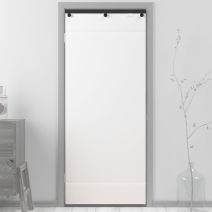
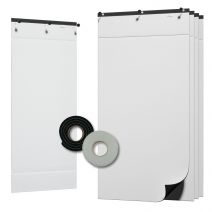
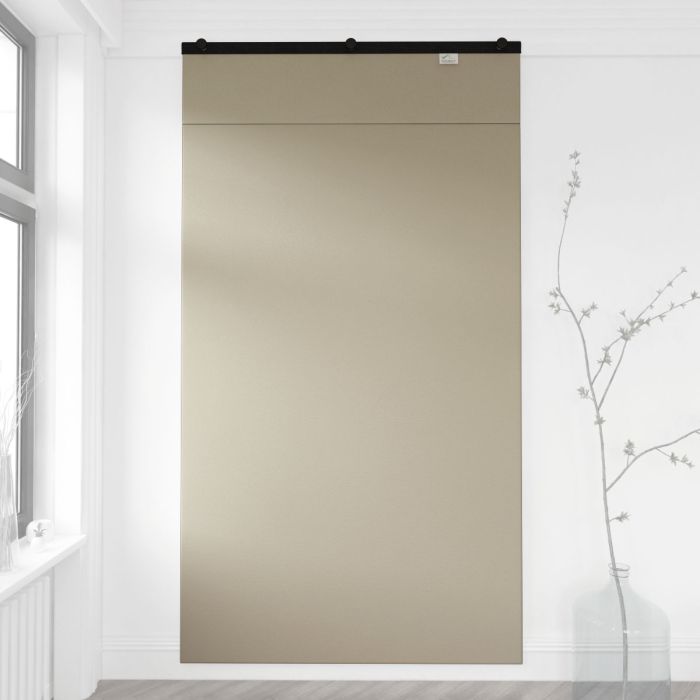
Audimute Sheets are great portable sound treatments
Sheets are aprox. 7.5'x4.5' (covering 34 sq/ft) with 3 grommets on each 4.5' side.
- High performance technology reduces volume levels
- NRC Rating .70
- Long Sheet Weight: approx. 10.5 lbs (un-packaged); Thickness: .5"
- Quilted outer layer and insulated inner layer
- Absorb echoes, reverberation and noise reflection
- Simple to install. Hung on walls, ceilings or over windows in minutes. Sheets can be easily hung with 3 grommets on each 4.5' side.
- Conveniently portable. Can be re-used and re-hung anywhere
- Can safely go from baby to band - no fiberglass - all natural materials
- Earth-friendly. Made from recycled products (content wool, polyester blend)
- Easily soundproofs a small area within a larger room
- Excellent warranty included
- Made in the USA
GO GREEN with Audimute sound absorbing drapery material
Not only do Audimute Sound Absorption Sheets offer outstanding acoustic performance, but they are also
manufactured from recycled cotton natural fibers, reducing landfill waste. Audimute's inexpensive sound absorbtion material is safe and non-toxic.
So why choose man-made fiberglass, dubbed as the next asbestos by many? Exposure to airborne fiberglass particles or direct contact with the product can cause skin, eye, nose and throat irritation and itching. Coughing is also a reaction to inhaled fibers. What’s more, fiberglass is considered to be a probable carcinogen by National Institutes of Health.
Fiberglass product packages display cancer warning labels unlike Audimute's cotton inexpensive sound absorbtion material that do not require this warning. These labels are required by the U.S. Occupational Safety and Health Administration (OSHA) based on determinations made by the International Agency for Research on Cancer (IARC) and the National Toxicology Program (NTP).
Be good to yourself and your environment, choose Audimute Sound Absorption Sheets, the natural and safe acoustic solution, a better alternative to fiberglass.
What's the difference between Absorption Sheets and a Moving Blanket? Click to find out.
Audimute Natural Sound Absorbing Drapery : | Fiberglass Sound Absorption : |
- Naturally made from recyclables, no harmful man-made fibers (wool, polyester blend)
| |
- Safe for all applications, Non-irritating alternative to fiberglass
| - Difficult to handle, May irritate skin upon contact
|
- Extremely
high Noise Reduction Coefficient that makes it more effective than
fiberglass in controlling air borne sound transmission
| - Lower Noise Reduction Coefficient, less effective than natural solution
|
- Helps reduce landfill waste, consumes less energy
| - Consumes more energy to manufacture
|
Compare Audimute Natural Acoustic Solutions to Foam Products
NRC Ratings for Inexpensive Sound Absorbtion Material:
| Material | NRC |
Audimute Sound Absorption Sheets | 0.70 |
Sound Absorbing Carpet with or without padding | 0.20-0.55 |
Polyurethane Foam (1" thick) | 0.30 |
Auralex 1" Studio Foam Wedge | 0.50 |
Sound Absorbing Drapery, light weight | 0.05-0.15 |
Sound Absorbing Drapery, medium weight | 0.55 |
Sound Absorbing Drapery, heavy weight | 0.60 |
Compare Us and See:
Audimute Sound Absorbing Drapery Material has an impressive "Sound Absorption Average - SAA" or "Noise Reduction Coefficient - NRC" of 0.70. Audimute Sound Absorbing Drapery Sheets simply outperform any other inexpensive sound absorbtion material.
How do I know
how much sound this product will absorb?
NRC ratings are
one of the best ways to compare similar sound absorption products and
determine which are most effective in absorbing sound at various
frequencies. The higher the NRC rating, the more effective the product.
How are NRC ratings determined?
Only
products that have been tested in a controlled lab setting receive an
NRC rating. The process of determining a product's NRC involves testing
its performance across some of the most common frequencies, then
averaging the sum of these individual ratings to determine the product's
overall NRC. In general, an NRC of 0 means a product is perfectly
reflective, whereas an NRC of 1 means the product is perfectly
absorptive.
Another way to look at these ratings is as a
percentage. For example, if a product has an overall NRC of .70 (such
as Audimute Absorption Sheets), the product is estimated to absorb
up to 70% of the mid and high frequencies in a room.
NRC Depends on Proper Use &
Installation
It's important to remember
that the NRC of sound absorption products is
determined based on proper use and installation. If a product has not
been installed following our recommended installation method, it may not
be as effective.
In general, sound absorption
products achieve poor NRC ratings in the
low frequency ranges, but do extremely well absorbing mid and high
frequencies. Based on these results, we typically recommend
absorption products for mid and high frequency applications, such as
those dealing with noise from pianos, flutes, voices, etc.
Please
feel free to give us a call at 866-505-MUTE if you have any questions
regarding the installation requirements of a specific Audimute product.
Below is the
official sound lab
report for Audimute Sound Absorption Sheets.
Audimute Sound Absorption Sheets were independently tested by Steelcase
Acoustical Test Lab.